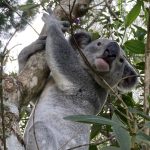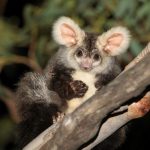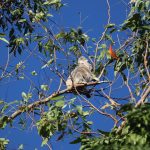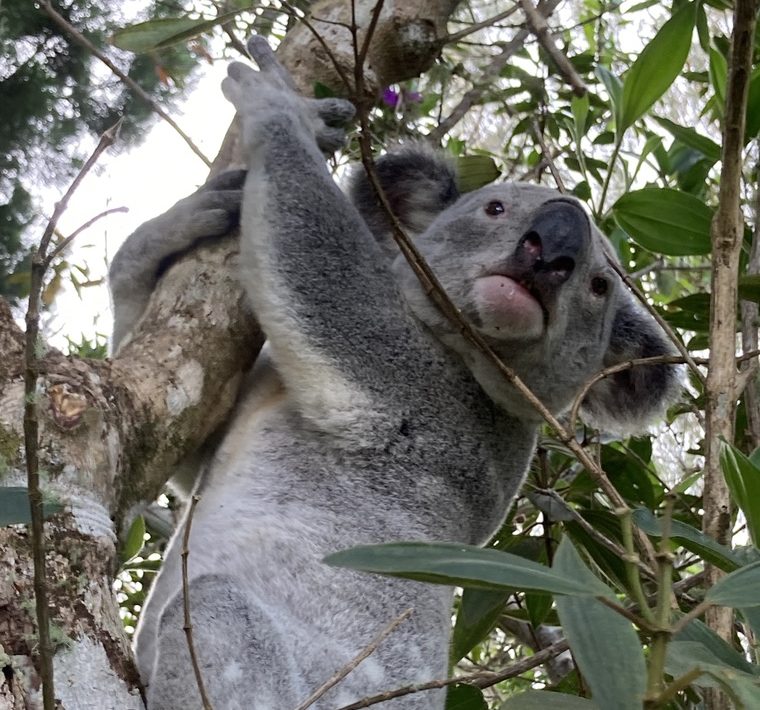

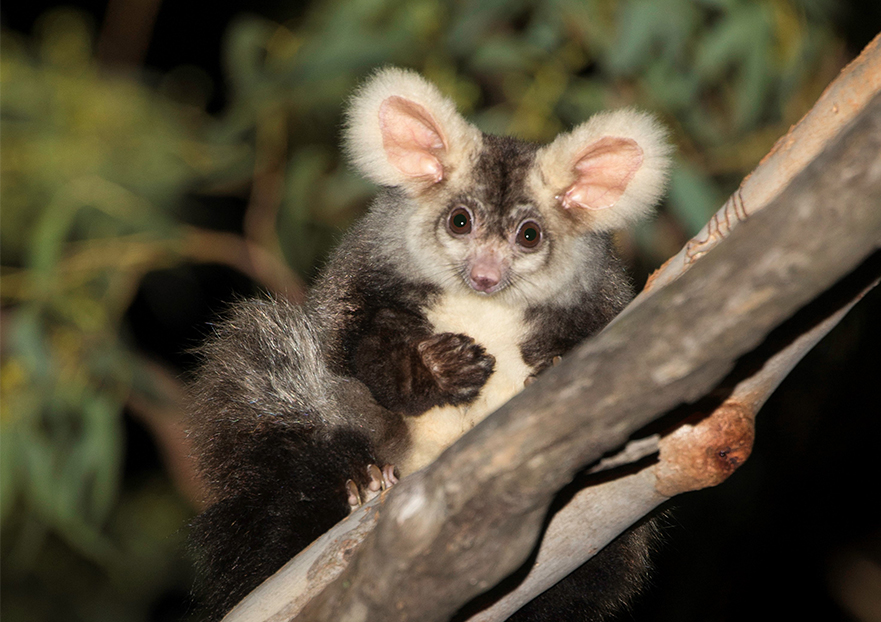
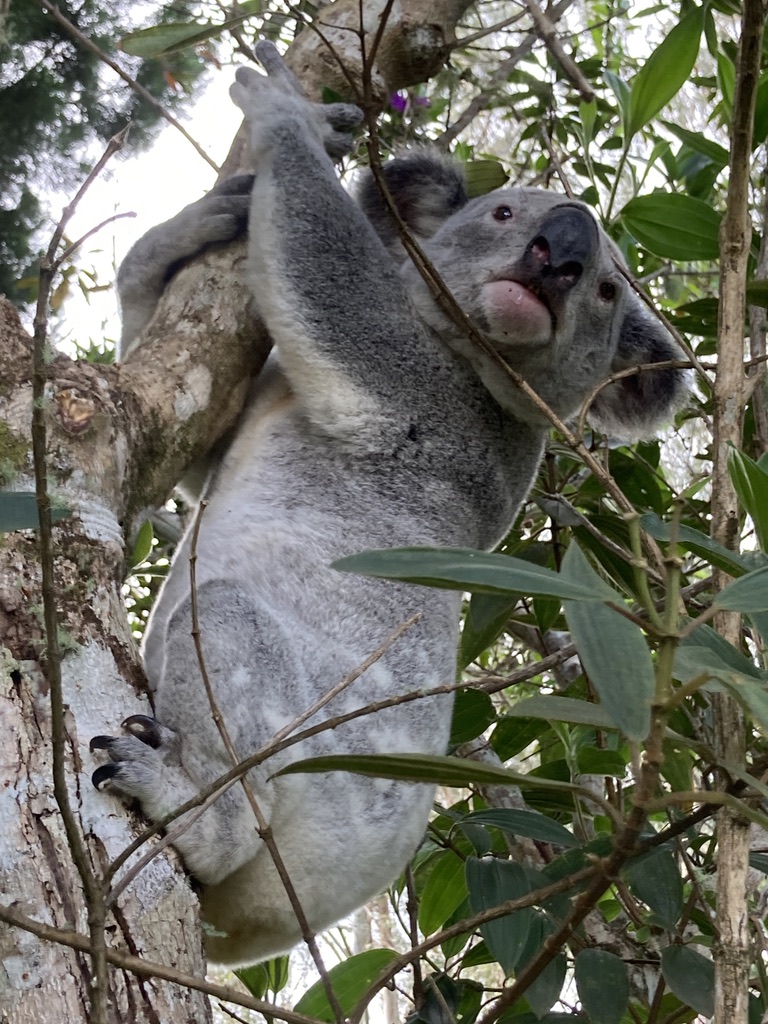
When we think of Australia’s forest wildlife, Koalas are often the first species that come to mind. But high in the same eucalypt canopy, another nocturnal specialist is gliding quietly between the trees – the Greater glider. These soft-furred, big-eared marsupials share much of their habitat with Koalas and are just as dependent on healthy, mature forests to survive.
Sharing the Same Forests as Koalas
Greater gliders live in eucalypt forests and woodlands across eastern Australia, including parts of the Sunshine Coast Hinterland. Like Koalas, they are strict leaf-eaters, relying almost entirely on eucalypt leaves for both food and water.
Because of this, they need extensive areas of connected, mature forest where suitable eucalypt species are available year-round. When we protect and restore habitat for Koalas, we are often helping Greater gliders at the same time – and vice versa. These species are part of the same community, using different parts of the canopy but depending on the same big old trees.
Why Mature Hollow Trees Matter
While Koalas usually rest in the forks of trees, Greater gliders are much more dependent on hollows. They spend their days tucked away inside tree cavities, sheltered from predators, heat and storms. Research shows they require large, hollowed-out trunks with wide entrances, and these hollows form only in very old eucalypts – often more than 200 years old.
The problem is that these ancient trees are disappearing. Logging, clearing, and intense bushfires have removed many of the largest hollow-bearing eucalypts across eastern Australia. Scientific studies have documented steep population declines, and today two species of Greater gliders are threatened – Petauroides volans is listed as Endangered, and Petauroides minor is Vulnerable under Australia’s Environment Protection and Biodiversity Conservation Act 1999 (EPBC Act). Because new hollows can take centuries to form, the loss of old trees creates a severe long-term shortage of shelter for hollow-dependent species like the Greater glider.
This is why projects that protect existing hollow-bearing trees, while also planting and nurturing future canopy trees, are so important for the long-term survival of Greater gliders.
One Glider, Many Homes
One of the most fascinating findings from recent research is that a single Greater glider doesn’t just use one hollow – it can use between 2 and 18 different tree hollows within its home range. Different hollows may offer varying levels of insulation, safety and proximity to feeding trees, and gliders appear to switch between them over time.
This means that a landscape that looks “okay” at first glance – a patch of forest with a handful of big old trees – may still be critically short of shelter if there aren’t enough suitable hollows for each animal to maintain a network of safe dens. For conservation, it isn’t just about having one hollow tree per glider. We need multiple hollow-bearing trees within each home range, connected by an intact canopy so gliders can glide safely between them at night.
Looking Ahead
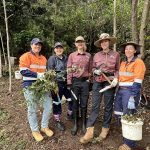
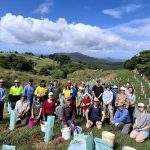
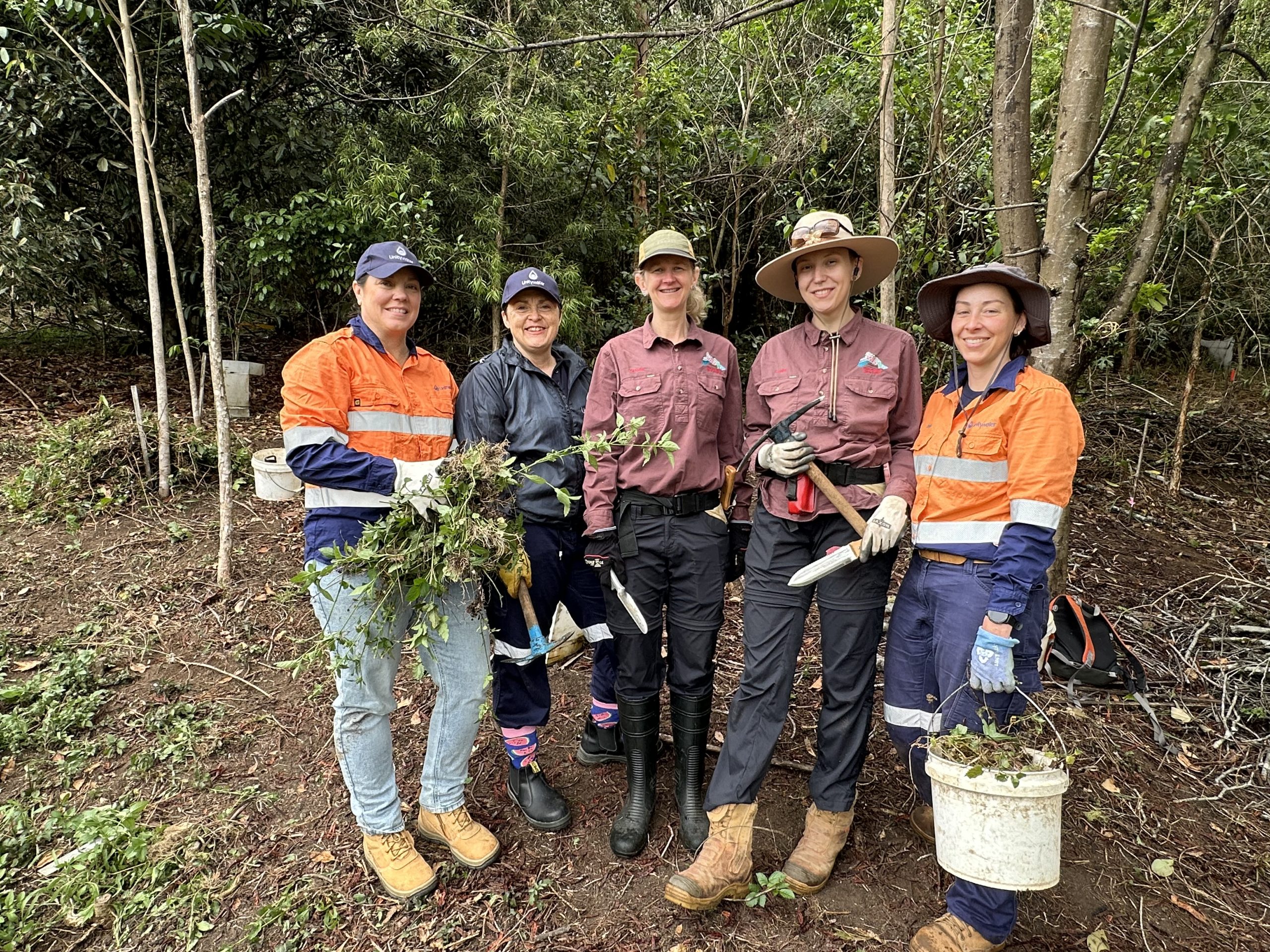
At Hinterland Bush Links, our work to protect mature trees, restore native vegetation and keep forest corridors connected is not only helping Koalas on the ground – it is also supporting their gliding neighbours above. By looking after the forests they share, we give both Koalas and Greater gliders a better chance to remain a thriving part of our Hinterland for generations to come.